
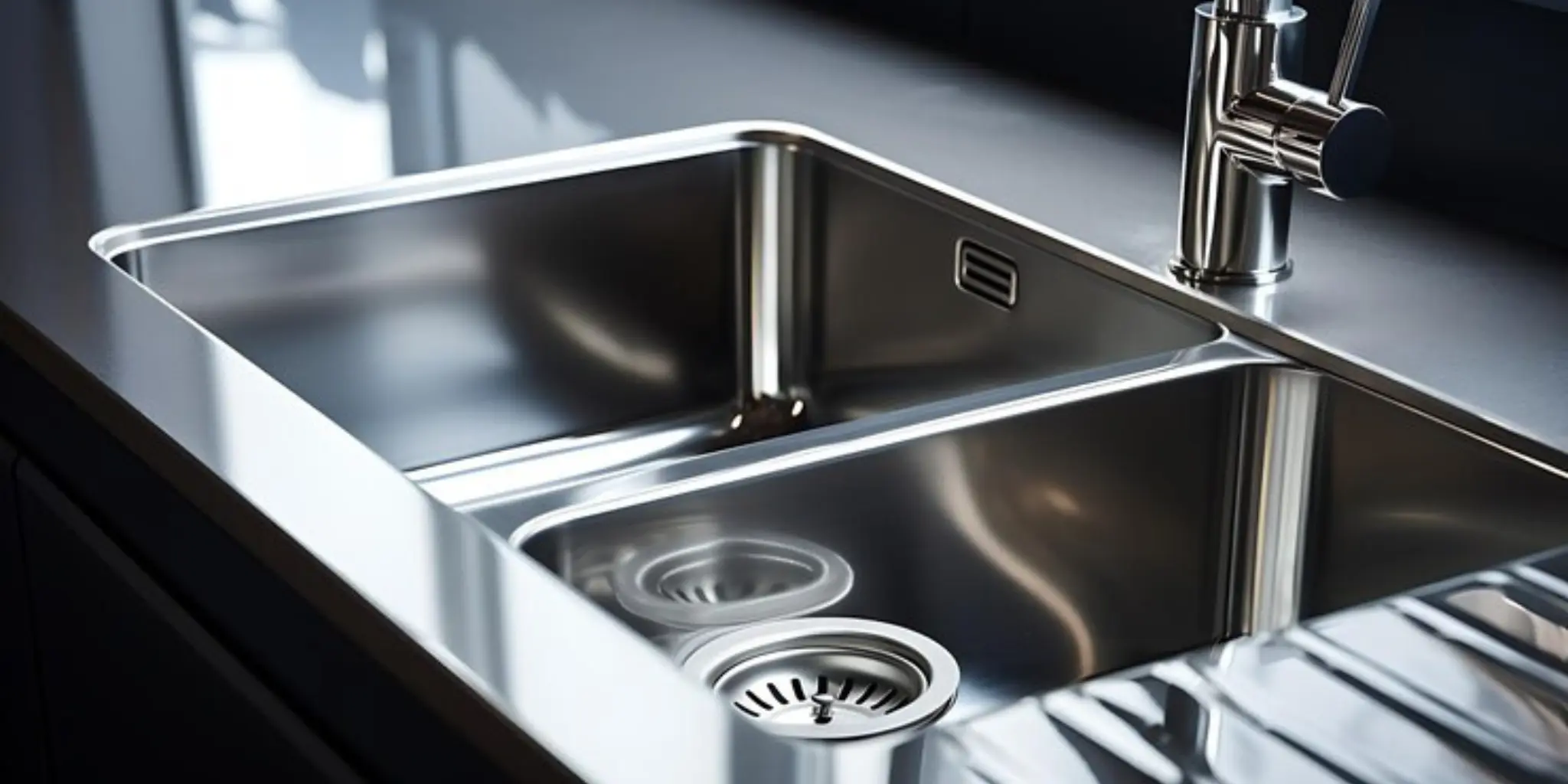
Buying a stainless steel sink is about more than choosing a size and style.
The right sink should suit your available space, kitchen workflow, cookware, cleaning requirements and expected level of use.
When comparing stainless steel sinks, look at the steel grade, thickness, bowl configuration, finish, sound insulation, installation method and fabrication quality.
For commercial kitchens, these factors become even more important because the sink may be used continuously throughout the day.
What Should You Look for When Buying a Stainless Steel Sink?
Before buying a stainless steel sink, consider:
-
Stainless steel grade
-
Steel thickness or gauge
-
Sink dimensions
-
Bowl configuration
-
Bowl depth
-
Sound insulation
-
Surface finish
-
Drain position
-
Installation type
-
Customisation options
-
Warranty
-
Supplier or fabricator experience
Considering these factors together will help you choose a sink that suits the way your kitchen is used.
1. Choose the Right Sink Size
Start by measuring the area where the sink will be installed.
Check:
-
Benchtop width
-
Benchtop depth
-
Cabinet dimensions
-
Available clearance
-
Plumbing position
-
Required bowl dimensions
-
Drain location
A larger sink may be useful for washing large cookware, but it needs to fit comfortably within the available space.
For commercial kitchens, consider the size of pots, trays and equipment that will regularly be washed in the sink.
2. Choose the Right Bowl Configuration
Stainless steel sinks are available in different configurations.
Single Bowl
A single large bowl can provide useful space for washing large pots, pans and equipment.
Double Bowl
A double bowl can make it easier to separate washing and rinsing tasks.
Multiple Bowl
Commercial kitchens may benefit from multiple bowls where different washing, rinsing or preparation tasks need to be separated.
Custom Configuration
Custom stainless steel fabrication can allow the bowl configuration to be designed around the kitchen layout.
If a standard sink does not fit your available space, a custom sink may provide greater flexibility.
3. Check the Stainless Steel Grade
The grade of stainless steel affects corrosion resistance and suitability for different environments.
Common grades include:
-
201 stainless steel
-
304 stainless steel
-
316 stainless steel
304 stainless steel is a common choice for kitchen applications because it provides a good balance of durability and corrosion resistance.
316 stainless steel offers greater corrosion resistance and may be suitable for more demanding environments.
For a detailed comparison, read:
[LINK: best grade stainless steel for kitchen sinks → https://cgcstainlesssteel.com.au/what-is-the-best-grade-stainless-steel-for-kitchen-sinks/]
4. Check the Stainless Steel Gauge
Gauge refers to the thickness of the stainless steel sheet.
A lower gauge number generally indicates thicker material.
When comparing sinks, ask about the actual material thickness rather than choosing based only on appearance.
A suitable thickness can provide:
-
Greater rigidity
-
Better resistance to dents
-
Improved durability
-
Reduced vibration
The appropriate thickness depends on the intended application.
5. Consider Sound Insulation
Stainless steel sinks can produce noise when water, cookware and dishes come into contact with the surface.
Some sinks use sound-absorbing pads or insulation to reduce noise.
This can be particularly useful in busy kitchens where the sink is used frequently.
When comparing products, ask whether sound insulation is included.
6. Choose the Right Sink Depth
Sink depth affects how the sink can be used.
A deeper bowl can provide more space for large cookware and may help reduce splashing.
At the same time, the sink should be comfortable for the people using it regularly.
For commercial applications, consider the size of the equipment and cookware that needs to be washed.
7. Choose a Practical Finish
The finish affects the appearance and maintenance of the sink.
Common finishes include brushed and satin finishes.
A brushed finish can help make minor scratches and fingerprints less noticeable.
When selecting a finish, consider how often the sink will be used and cleaned.
For commercial kitchens, practicality and ease of maintenance should be considered alongside appearance.
8. Check the Drain Position
Drain placement can affect the usable space underneath the sink.
A rear-positioned drain may provide more cabinet storage space in some installations.
For custom sinks, the drain position can sometimes be planned around:
-
Plumbing
-
Cabinet space
-
Bowl configuration
-
Benchtop layout
-
Kitchen workflow
Discuss the drain position before fabrication if you require a custom sink.
9. Decide Between Standard and Custom Fabrication
A standard stainless steel sink may be suitable when the available space matches common sink dimensions.
Custom fabrication can be useful when you need specific dimensions or features.
A custom sink can be designed around:
-
Available space
-
Bowl size
-
Number of bowls
-
Drain position
-
Drainer requirements
-
Splashback
-
Benchtop integration
-
Commercial kitchen workflow
If you need a sink designed specifically for your kitchen, see custom stainless steel sink Melbourne.
10. Compare Local Fabricators and Online Suppliers
When buying a stainless steel sink, you can choose between a standard ready-made product and a custom-fabricated solution.
Online or Ready-Made Sinks
These can provide:
-
Standard dimensions
-
Broad product selection
-
Faster comparison
-
Different price points
They may be suitable when a standard size meets your requirements.
Local Stainless Steel Fabricators
A local fabricator can provide:
-
Custom dimensions
-
Custom bowl configurations
-
Integrated drainers
-
Bench integration
-
Project-specific advice
-
Fabrication for unusual layouts
Custom fabrication can be particularly useful for commercial kitchens or projects with specific dimensions.
11. Consider the Sink Warranty
Check the warranty before purchasing.
Look at what the warranty covers and whether there are specific requirements relating to installation, cleaning or maintenance.
Do not choose a sink based on warranty length alone.
Material quality, construction and fabrication should also be considered.
12. Check Whether the Sink Can Be Integrated With a Stainless Steel Bench
If you are designing a commercial kitchen, the sink may need to form part of a larger stainless steel workstation.
Integration with a stainless steel bench can provide a practical working area and help create a consistent layout.
For commercial bench requirements, see commercial stainless steel benches Melbourne.
Stainless Steel Sink for a Commercial Kitchen
Commercial kitchen sinks are used more heavily than many residential sinks.
They may need to handle:
-
Large cookware
-
Heavy equipment
-
Frequent washing
-
Constant moisture
-
Food preparation
-
Regular cleaning
-
High-volume kitchen operations
For this reason, commercial sink selection should consider the entire workflow rather than just appearance.
The sink size, bowl configuration, steel grade, thickness and installation method should all suit the intended use.
What Is the Best Stainless Steel for a Commercial Kitchen Sink?
304 stainless steel can be suitable for many commercial kitchen applications because of its durability and corrosion resistance.
316 stainless steel may be considered for more demanding environments where additional corrosion resistance is required.
The right material depends on the kitchen environment, cleaning methods, exposure to corrosive substances and expected workload.
How Deep Should a Stainless Steel Sink Be?
There is no single depth that suits every kitchen.
A deeper sink can be useful for large cookware and equipment.
For a commercial kitchen, choose the depth based on:
-
Cookware size
-
Equipment washing requirements
-
Available bench space
-
User comfort
-
Plumbing requirements
The sink should be practical for the tasks it will perform every day.
How Do You Maintain a Stainless Steel Sink?
Regular cleaning helps maintain the appearance and condition of stainless steel.
For routine care:
-
Remove food residue
-
Rinse the surface
-
Use a suitable mild cleaner
-
Use a soft cloth or sponge
-
Dry the surface after cleaning
-
Avoid abrasive materials
If your sink develops brown marks, see our guide on how to remove brown stains from stainless steel sink.
For more cleaning advice, you can also read how to clean a stainless steel sink safely.
How Do You Choose a Quality Stainless Steel Sink?
A good-quality sink should be assessed on more than its appearance.
Check:
-
Stainless steel grade
-
Steel thickness
-
Bowl configuration
-
Sink dimensions
-
Bowl depth
-
Surface finish
-
Sound insulation
-
Drain position
-
Installation method
-
Fabrication quality
For a more detailed buying checklist, read how to choose a quality stainless steel sink.
Custom Stainless Steel Sink Melbourne
If a standard sink does not suit your kitchen, custom fabrication can provide greater flexibility.
CGC Stainless Steel provides stainless steel sink Melbourne solutions for commercial kitchens and other applications.
Custom options can include:
-
Single bowls
-
Double bowls
-
Multiple bowls
-
Custom dimensions
-
Integrated drainers
-
Splashbacks
-
Bench integration
-
Different steel grades
-
Project-specific configurations
The sink can be designed around the available space and intended workflow.
Why Choose a Stainless Steel Sink?
Stainless steel is widely used in kitchens because it combines durability, moisture resistance and a surface that can be cleaned regularly.
It can also be fabricated into different shapes and dimensions.
For commercial kitchens, stainless steel can be used across multiple components, including:
-
Sinks
-
Benches
-
Preparation tables
-
Splashbacks
-
Workstations
-
Storage areas
This allows different stainless steel components to work together within the same kitchen layout.
Stainless Steel Sink Buying Checklist
Before ordering your sink, check the following:
-
Correct sink dimensions
-
Suitable bowl configuration
-
Appropriate steel grade
-
Suitable material thickness
-
Practical sink depth
-
Suitable finish
-
Sound insulation
-
Drain position
-
Installation method
-
Warranty
-
Customisation requirements
-
Supplier or fabricator experience
For commercial kitchens, also confirm that the sink suits the equipment, workflow and expected daily use.
Get a Stainless Steel Sink Made for Your Kitchen
The best stainless steel sink is the one that matches your space, workflow and intended use.
For a standard kitchen, a ready-made sink may be enough.
For a commercial kitchen, unusual layout or integrated stainless steel workstation, custom fabrication may provide a better fit.
CGC Stainless Steel provides stainless steel sink fabrication and custom options for commercial kitchen applications.
[LINK: View Stainless Steel Sink Services → https://cgcstainlesssteel.com.au/stainless-steel-sink/]
If you need advice about dimensions, bowl configuration or custom fabrication, contact CGC Stainless Steel.
Frequently Asked Questions
What should I look for when buying a stainless steel sink?
Consider the stainless steel grade, thickness, dimensions, bowl configuration, depth, finish, sound insulation, installation method and fabrication quality.
Is 304 stainless steel good for a kitchen sink?
Yes. 304 stainless steel is a common choice for kitchen applications because it offers good durability and corrosion resistance.
Is 316 stainless steel better than 304?
316 provides greater corrosion resistance and may be suitable for more demanding environments. It is not necessary for every kitchen.
What gauge stainless steel sink is best?
The appropriate thickness depends on the intended use. Thicker material can provide greater rigidity and resistance to dents.
Is a deeper stainless steel sink better?
A deeper sink can be useful for large cookware, but the correct depth depends on the kitchen layout and how the sink will be used.
Are custom stainless steel sinks worth it?
Custom sinks can be useful when standard sizes do not fit or when you require specific bowl configurations, drainers or integration with a stainless steel bench.
Can a stainless steel sink be integrated with a bench?
Yes. A sink can be designed as part of a larger stainless steel workstation or commercial bench.
How do I choose a stainless steel sink for a commercial kitchen?
Consider the kitchen workflow, cookware size, expected workload, bowl configuration, steel grade, thickness, cleaning requirements and available installation space.
Where can I get a custom stainless steel sink in Melbourne?
CGC Stainless Steel provides stainless steel sink fabrication and custom options for commercial kitchen applications in Melbourne.
How do I keep a stainless steel sink clean?
Clean the sink regularly with suitable non-abrasive products, rinse away residue and dry the surface after cleaning.