Choosing the right material for a commercial bench depends on where the bench will be used, how often it will be used and what type of work will be carried out on it.
Mild steel and stainless steel are both used for fabricated benches, but they have different properties.
For commercial kitchens, food preparation areas and other environments where hygiene, moisture resistance and regular cleaning are important, stainless steel is often a practical choice.
Mild steel can be suitable for certain industrial and indoor applications where the environment is controlled, and the budget is a major consideration.
This guide compares stainless steel benches and mild steel benches so you can choose the material that best suits your project.
Stainless Steel vs Mild Steel at a Glance
| Feature | Stainless Steel Benches | Mild Steel Benches |
|---|---|---|
| Corrosion resistance | High | Requires suitable protection |
| Hygiene | Suitable for food preparation environments | Depends on coating and finish |
| Cleaning | Easy to clean | Depends on surface treatment |
| Moisture resistance | High | Lower without protection |
| Maintenance | Generally low | May require additional maintenance |
| Appearance | Clean and professional | Industrial appearance |
| Initial cost | Generally higher | Generally lower |
| Commercial kitchen use | Highly suitable | Less suitable for many food-preparation applications |
| Custom fabrication | Available | Available |
The best option depends on the environment and intended use.
What Is a Stainless Steel Bench?
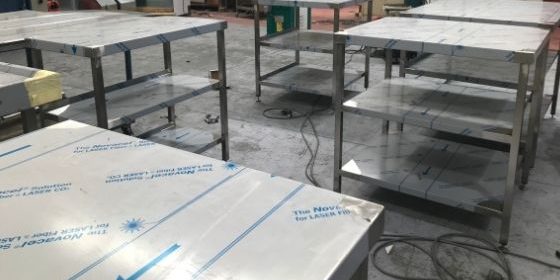
A stainless steel bench is a fabricated work surface made from stainless steel.
Stainless steel benches are commonly used in:
- Commercial kitchens
- Restaurants
- Cafés
- Takeaway shops
- Food preparation areas
- Catering facilities
- Healthcare environments
- Laboratories
- Industrial workplaces
They can be fabricated in different dimensions and configurations to suit the available space.
For commercial kitchen applications, stainless steel can provide a practical combination of durability, cleanability and resistance to moisture.
What Is a Mild Steel Bench?
Mild steel is a carbon steel material that is commonly used for industrial and general fabrication applications.
Mild steel benches can be suitable for:
- Workshops
- Warehouses
- Industrial areas
- Storage applications
- Controlled indoor environments
- Light-duty work areas
Because mild steel can be susceptible to corrosion, it may require paint, powder coating, galvanising or another suitable protective treatment depending on the application.
Stainless Steel Benches vs Mild Steel Benches: Key Differences
1. Corrosion Resistance
One of the main differences is corrosion resistance.
Stainless steel contains chromium, which helps provide corrosion resistance.
Mild steel does not have the same corrosion resistance and generally requires a protective coating or treatment when exposed to moisture.
For commercial kitchens, where benches may be exposed to water, steam and frequent cleaning, corrosion resistance is an important consideration.
2. Hygiene and Cleaning
Commercial kitchen benches need to be cleaned regularly.
Stainless steel provides a smooth surface that can be cleaned and sanitised using appropriate cleaning methods.
Mild steel can also be cleaned, but the suitability depends on its surface treatment and the condition of the protective coating.
For food preparation areas, stainless steel is generally a more practical option.
3. Maintenance
Stainless steel benches generally require less surface maintenance than mild steel benches in environments where moisture is present.
Mild steel may need periodic inspection and treatment to maintain its protective coating and reduce the risk of corrosion.
The required maintenance depends on the environment and how the bench is used.
4. Durability
Both materials can provide durable fabricated products when designed and manufactured correctly.
The difference is how they perform in the environment where they are installed.
Stainless steel can be well suited to environments involving:
- Water
- Humidity
- Food preparation
- Frequent cleaning
- Commercial kitchen use
Mild steel can perform well in controlled environments where moisture exposure is limited, and suitable protective treatment is maintained.
5. Appearance
Stainless steel provides a clean and professional appearance that suits commercial kitchens and hospitality environments.
Mild steel has a more industrial appearance and can be painted or coated in different colours.
The preferred appearance depends on the location and purpose of the bench.
6. Initial Cost
Mild steel is generally less expensive than stainless steel.
Stainless steel can have a higher initial purchase price because of the material and fabrication requirements.
When comparing prices, consider the complete cost rather than the initial purchase price alone.
This includes:
- Maintenance
- Protective treatments
- Expected service life
- Cleaning requirements
- Replacement costs
- Suitability for the working environment
When Should You Choose Stainless Steel Benches?
Stainless steel is generally a strong option when the bench will be used in an environment where hygiene, moisture resistance and frequent cleaning are important.
Consider stainless steel for:
Commercial Kitchens
Restaurants, cafés and takeaway kitchens regularly expose work surfaces to food, water, grease and cleaning products.
Food Preparation Areas
Stainless steel can provide a practical surface for food preparation when the correct material and cleaning procedures are used.
Catering Businesses
Catering operations may require durable benches that can withstand regular use and cleaning.
Healthcare and Laboratory Environments
Some healthcare and laboratory applications may require cleanable and corrosion-resistant work surfaces.
Moist or Humid Areas
Stainless steel can be useful where the bench is regularly exposed to moisture.
When Can Mild Steel Benches Be Suitable?
Mild steel can be a practical option for applications where the bench does not need the same level of corrosion resistance as a commercial kitchen work surface.
Examples include:
- Workshops
- Warehouses
- Industrial work areas
- Storage areas
- General fabrication environments
If the bench will be exposed to moisture, food or frequent washing, the material and protective treatment should be considered carefully.
Are Stainless Steel Benches Better for Commercial Kitchens?
For many commercial kitchens, stainless steel is a practical choice because the material is suited to regular cleaning and moisture exposure.
Commercial kitchen benches can be used for:
- Food preparation
- Plating
- Packing
- Equipment support
- Storage
- General kitchen work
The design should also consider the required working height, bench depth, available space and kitchen workflow.
For purpose-built commercial stainless steel benches, see our service page.
commercial stainless steel benches
Custom Stainless Steel Benches
Not every commercial kitchen has standard dimensions.
Custom stainless steel fabrication can be useful when you need a bench designed around:
- Existing equipment
- Wall dimensions
- Kitchen layout
- Available floor space
- Required working height
- Storage requirements
- Sink locations
- Staff workflow
A custom bench can be fabricated to suit the specific requirements of the project.
custom stainless steel fabrication
Stainless Steel Bench Configurations
Commercial stainless steel benches can be designed in different configurations.
Depending on the project, options can include:
- Flat work benches
- Benches with undershelves
- Benches with drawers
- Benches with cupboards
- Preparation benches
- Equipment benches
- Wall-mounted work surfaces
- Benches integrated with sinks
The appropriate configuration depends on the kitchen layout and intended use.
Stainless Steel Benches With Sinks
Some commercial kitchens require a workbench and sink arrangement that works together.
A custom stainless steel fabrication project can incorporate sink areas into the overall kitchen layout where appropriate.
If you need a stainless steel sink, see our stainless steel sink service.
How to Choose Between Stainless Steel and Mild Steel
Ask these questions before making a decision:
- Will the bench be exposed to water?
- Will it be used for food preparation?
- How frequently will it be cleaned?
- Is corrosion resistance important?
- Will the bench be installed indoors or outdoors?
- Does the bench need a painted or coated finish?
- How much maintenance can be performed?
- What is the expected workload?
- Does the bench need custom dimensions?
- What is the total long-term cost?
Your answers will help determine which material is more suitable.
Stainless Steel vs Mild Steel: Cost vs Long-Term Value
Mild steel can offer a lower initial cost.
Stainless steel may cost more at the time of purchase, but it can be a better fit for environments where corrosion resistance, cleaning and regular use are important.
The right decision should consider:
Initial price + maintenance + durability + suitability for the environment
Rather than choosing solely on the lowest purchase price.
Stainless Steel Benches Melbourne
Businesses looking for stainless steel benches Melbourne can choose custom fabrication based on the dimensions and requirements of their commercial space.
CGC Stainless Steel provides commercial stainless steel bench fabrication for businesses and commercial kitchens.
stainless steel benches Melbourne
Custom bench designs can account for available space, equipment and intended use.
Stainless Steel Benches for Commercial Kitchens
Commercial kitchens need work surfaces that can withstand regular use and cleaning.
Stainless steel benches can be used for:
- Food preparation
- Plating
- Storage
- Equipment support
- Packing
- General kitchen work
The bench should be designed according to the workflow and available space.
Final Decision: Mild Steel or Stainless Steel?
Mild steel can be suitable for industrial and controlled indoor environments where protective treatment and budget are important considerations.
Stainless steel is generally more suitable for commercial kitchens and food-related applications where hygiene, moisture resistance, easy cleaning and long-term durability are priorities.
For a commercial kitchen, stainless steel is often the more practical choice.
Get a Quote for Commercial Stainless Steel Benches
If you need custom stainless steel benches for a commercial kitchen, restaurant, café, food business or other commercial environment, CGC Stainless Steel can discuss your requirements.
You can provide your preferred dimensions, layout, equipment requirements and intended use so the fabrication can be planned around your project.
Frequently Asked Questions
Are stainless steel benches better than mild steel benches?
For commercial kitchens and food preparation areas, stainless steel is generally more suitable because of its corrosion resistance, cleanability and suitability for regular moisture exposure.
Are mild steel benches cheaper than stainless steel benches?
Mild steel generally has a lower initial material cost than stainless steel. The overall cost should also consider maintenance, protective treatments and expected service life.
Are stainless steel benches suitable for commercial kitchens?
Yes. Stainless steel benches are widely used in commercial kitchens for food preparation, plating, equipment support and general work areas.
Do mild steel benches rust?
Mild steel can corrode when exposed to moisture if it does not have suitable protective treatment. The type and condition of the coating can affect its resistance.
Are stainless steel benches easy to clean?
Yes. Stainless steel provides a smooth surface that can generally be cleaned using suitable cleaning methods and products.
Can stainless steel benches be custom made?
Yes. Commercial stainless steel benches can be fabricated to specific dimensions and configurations based on the kitchen layout and intended use.
Can a stainless steel bench include storage?
Yes. Depending on the design, stainless steel benches can include undershelves, drawers, cupboards and other storage features.
Can a stainless steel bench include a sink?
Yes. Custom stainless steel fabrication can incorporate sink areas into suitable bench configurations.
What stainless steel is used for commercial benches?
The appropriate stainless steel grade depends on the application and environment. Material selection should consider moisture exposure, cleaning requirements and intended use.
Where can I get commercial stainless steel benches in Melbourne?
CGC Stainless Steel provides commercial stainless steel bench fabrication for businesses and commercial kitchens in Melbourne and surrounding areas.