Commercial Range Hood vs Commercial Exhaust Canopy: What’s the Difference?
Choosing the right ventilation system is an important part of planning a commercial kitchen. Restaurants, cafés, takeaway shops, hotels and other food businesses need effective extraction to remove heat, smoke, grease, steam and cooking vapours from the cooking area.
Two terms you will often hear are commercial range hood and commercial exhaust canopy. Although these terms are sometimes used interchangeably, they can refer to different parts of a commercial kitchen extraction system.
So, what is the difference between a commercial range hood and a commercial exhaust canopy? And which option is suitable for your commercial kitchen?
Let’s break it down.
What Is a Commercial Range Hood?
A commercial range hood is an extraction system designed to capture airborne contaminants produced during cooking.
Depending on the kitchen design, a commercial range hood system can include components such as:
- An extraction canopy or hood
- Grease filters
- Exhaust fans
- Ductwork
- Make-up or replacement air
- Associated ventilation components
The purpose is to capture and remove heat, smoke, grease particles, steam and cooking fumes from above commercial cooking equipment.
A commercial range hood can form part of a complete mechanical exhaust system rather than being limited to the hood structure positioned above the cooking appliances.
What Is a Commercial Exhaust Canopy?
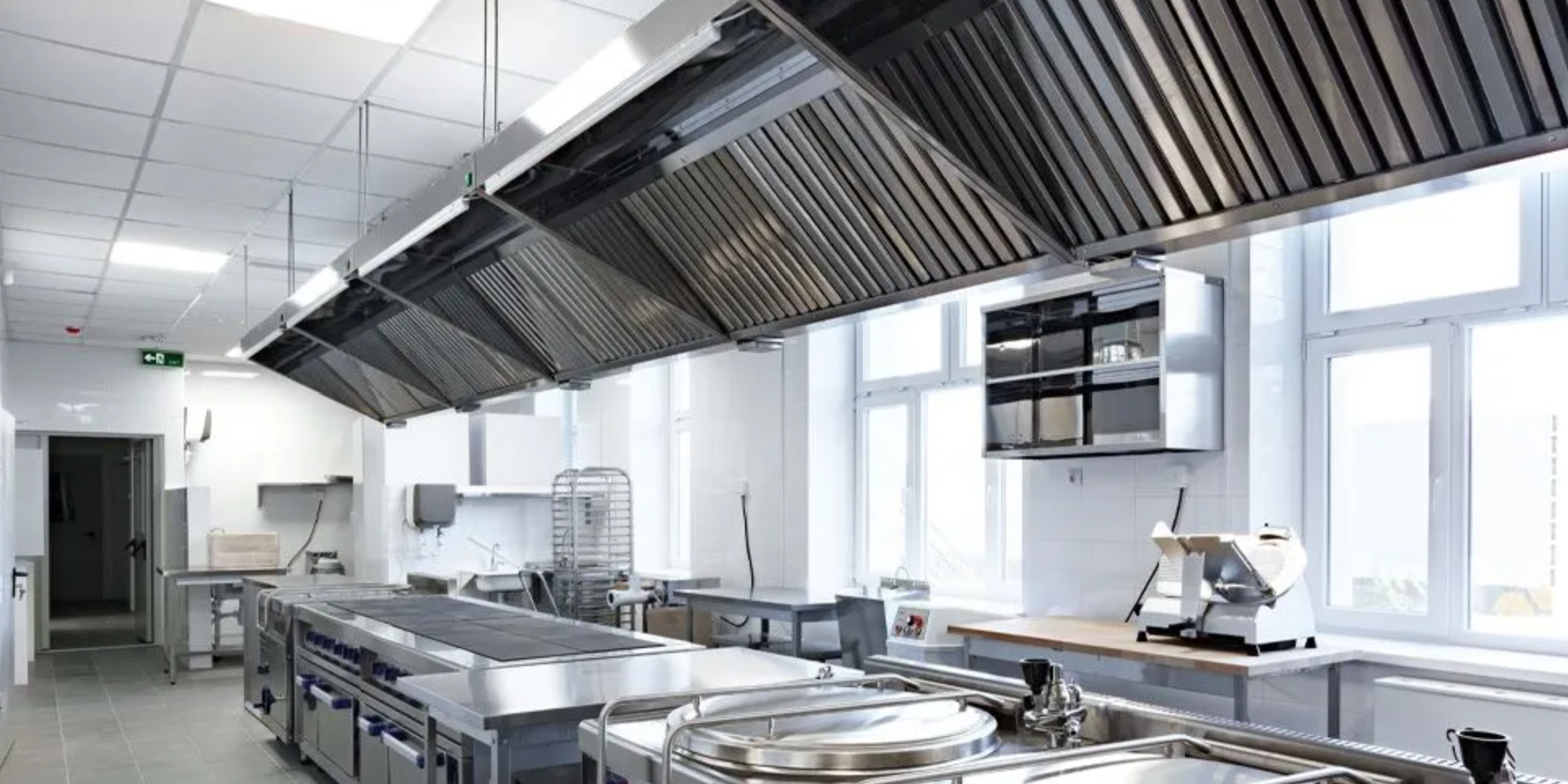
A commercial exhaust canopy is a canopy-style extraction hood installed above commercial cooking equipment. It is commonly designed to cover a cooking line or multiple appliances.
The canopy is generally positioned over equipment such as:
- Commercial cooktops
- Deep fryers
- Grills
- Chargrills
- Ovens
- Ranges
- Other commercial cooking appliances
The captured air then moves through filters and into the exhaust system. The system can include ductwork and an exhaust fan that transfers contaminated air outside the building.
For businesses that need a custom commercial exhaust canopy, CGC Stainless Steel provides custom stainless steel canopy solutions for commercial kitchens.
Commercial Range Hood vs Commercial Exhaust Canopy
The easiest way to understand the difference is to think about the canopy as one major component of the wider extraction system.
| Feature | Commercial Range Hood | Commercial Exhaust Canopy |
|---|---|---|
| Main purpose | Extract cooking contaminants | Capture contaminants above cooking equipment |
| Position | Above cooking equipment | Directly above cooking equipment |
| Filters | Usually included in the system | Grease filters are commonly fitted |
| Ductwork | May form part of the complete system | Connects to exhaust ductwork |
| Exhaust fan | Can be part of the complete system | Works with the connected exhaust system |
| Custom fabrication | Often required for commercial kitchens | Commonly custom fabricated |
| Best suited to | Commercial extraction systems | Cooking lines or multiple appliances |
The terminology can vary between suppliers and kitchen projects, so it is important to look at the complete ventilation system rather than relying only on the name used to describe it.
How Does a Commercial Exhaust Canopy Work?
A commercial exhaust canopy works by capturing contaminated air at the source.
The general process is:
Cooking equipment → Canopy → Filters → Ductwork → Exhaust fan → External discharge
The canopy is positioned above the cooking equipment. As food is cooked, heat, smoke, grease and vapours rise toward the canopy.
Grease filters help capture grease particles before the extracted air enters the duct system. The exhaust system then transfers the air through the ductwork and discharges it outside the building.
The exact system requirements depend on the cooking equipment, kitchen layout, building configuration and applicable requirements.
For more information about commercial kitchen ventilation, see our guide to Commercial Kitchen Ventilation Requirements Brisbane.
Commercial Kitchen Ventilation Requirements Brisbane
Do Commercial Kitchens Need an Exhaust Canopy?
Many commercial kitchens require mechanical extraction because cooking processes can produce significant amounts of heat, smoke, grease and airborne contaminants.
Whether a particular kitchen needs an exhaust canopy depends on factors such as:
- Type of cooking equipment
- Cooking methods
- Kitchen layout
- Building configuration
- Exhaust requirements
- Local regulations and applicable standards
For this reason, a commercial kitchen ventilation system should be planned around the actual cooking equipment and expected usage.
What Is the Difference Between a Range Hood and Exhaust Canopy?
The key difference is that commercial exhaust canopy generally refers to the hood structure that captures cooking emissions, while commercial range hood can be used to describe the extraction hood or the wider extraction arrangement.
In a complete commercial kitchen ventilation system, the canopy, filters, ductwork and exhaust fan work together.
This means a business should not choose a canopy or hood based only on its appearance or dimensions. The complete extraction system needs to work with the cooking equipment and kitchen layout.
Why Does Commercial Kitchen Ventilation Matter?
Effective kitchen ventilation helps control:
- Heat
- Smoke
- Grease
- Steam
- Cooking odours
- Airborne contaminants
A properly planned system can also help create a more comfortable working environment for kitchen staff.
The extraction system should be designed according to the type and amount of cooking taking place. A small café kitchen and a high-volume restaurant kitchen may have very different ventilation requirements.
Commercial Exhaust Canopy and Ductwork
The canopy is only one part of a complete extraction system.
Once contaminated air is captured, it needs to travel through suitable ductwork before being discharged outside.
A commercial kitchen exhaust system may include more than just the hood or canopy. Depending on the project, the overall system can involve the hood, grease filters, commercial exhaust ductwork, exhaust fan and other ventilation components.
Canopy selection and duct design should therefore be considered together when planning a new commercial kitchen or modifying an existing ventilation system.
Choosing the Right Commercial Range Hood or Exhaust Canopy
When selecting a commercial extraction system, consider the following:
1. Cooking Equipment
Start with the appliances that will operate underneath the canopy.
Deep fryers, grills, chargrills and other high-output appliances can produce different levels of heat, smoke and grease.
2. Canopy Size
The canopy needs to provide suitable coverage over the cooking equipment.
Its dimensions should be considered in relation to the equipment layout and extraction requirements.
3. Filters
Grease filters play an important role in commercial kitchen extraction systems.
The appropriate filter arrangement depends on the cooking processes and system design.
4. Ductwork
The exhaust duct connects the canopy to the external discharge point.
Duct routing, construction and access for maintenance should be considered during the design stage.
5. Exhaust Fan
The exhaust fan provides the airflow required to move extracted air through the system.
Fan selection needs to correspond with the overall system design.
6. Kitchen Layout
The position of cooking appliances, walls, ceilings, roof space and external discharge points can all affect the ventilation design.
Commercial Range Hood and Exhaust Canopy Installation
Installing a commercial extraction system involves more than mounting a stainless steel canopy above cooking equipment.
The project may involve:
- Reviewing the kitchen layout
- Assessing the cooking equipment
- Designing the canopy
- Selecting appropriate filters
- Planning the duct route
- Selecting the exhaust fan
- Fabricating the stainless steel components
- Installing the system
- Checking the completed installation
A properly planned installation helps ensure that the extraction system is suited to the commercial kitchen.
Commercial Exhaust Canopy for Brisbane Businesses
Businesses in Brisbane looking for a commercial range hood or exhaust canopy should consider the complete extraction system rather than selecting a hood in isolation.
CGC Stainless Steel provides custom stainless steel commercial exhaust canopy solutions for restaurants, cafés, takeaway shops, hotels and commercial kitchens.
For Brisbane businesses, see our commercial exhaust canopy Brisbane service for location-specific fabrication and installation information.
commercial exhaust canopy Brisbane
Food Truck Exhaust Canopy Solutions
Mobile food businesses have different kitchen layouts and equipment requirements compared with fixed commercial kitchens.
A purpose-built food truck exhaust canopy may be required as part of the kitchen extraction setup, depending on the cooking equipment and ventilation requirements.
A custom stainless steel solution can be designed around the available space, cooking equipment and extraction system.
When Should You Choose a Custom Commercial Exhaust Canopy?
A custom canopy can be useful when the kitchen has specific equipment, limited space or a particular layout that cannot be accommodated by a standard hood.
Custom fabrication can allow the canopy to be designed around:
- Cooking equipment
- Kitchen dimensions
- Wall and ceiling configuration
- Duct connection points
- Filter arrangement
- Required extraction layout
This can be particularly useful for restaurants, cafés, takeaway shops and other commercial food businesses.
Frequently Asked Questions
Is a commercial range hood the same as an exhaust canopy?
The terms are sometimes used interchangeably, but they can describe different parts of a commercial extraction system. An exhaust canopy is generally the hood structure positioned above cooking equipment, while a commercial range hood may refer to the hood or the wider extraction arrangement.
What does a commercial exhaust canopy do?
A commercial exhaust canopy captures heat, smoke, grease, steam and cooking vapours produced by commercial cooking equipment before these contaminants enter the exhaust system.
Does a commercial exhaust canopy need ductwork?
A typical commercial exhaust canopy forms part of a larger extraction system that uses ductwork to transfer extracted air to an external discharge point. The exact arrangement depends on the building and system design.
What appliances can be installed under a commercial exhaust canopy?
Depending on the system design, commercial exhaust canopies can be used above equipment such as cooktops, fryers, grills, ovens, ranges and other commercial cooking appliances.
How do I choose the right commercial exhaust canopy?
Consider the cooking equipment, canopy dimensions, kitchen layout, filters, ductwork, exhaust fan and overall ventilation requirements. A commercial extraction specialist can assess the kitchen and recommend a suitable configuration.
Do restaurants need commercial kitchen ventilation?
Commercial kitchens commonly require mechanical extraction because cooking produces heat, smoke, grease and other airborne contaminants. The exact requirements depend on the equipment, cooking processes, building and applicable regulations.
Can a commercial exhaust canopy be custom made?
Yes. A commercial exhaust canopy can be custom fabricated to suit the cooking equipment, available space, kitchen layout and required extraction configuration.
Can CGC Stainless Steel help with commercial exhaust canopy projects?
CGC Stainless Steel provides custom stainless steel commercial exhaust canopy fabrication and related extraction solutions for commercial kitchens.
Need Help Choosing a Commercial Exhaust System?
Choosing between a commercial range hood and exhaust canopy depends on your cooking equipment, kitchen layout and extraction requirements.
If you need help planning a custom stainless steel extraction solution, contact CGC Stainless Steel to discuss your project.