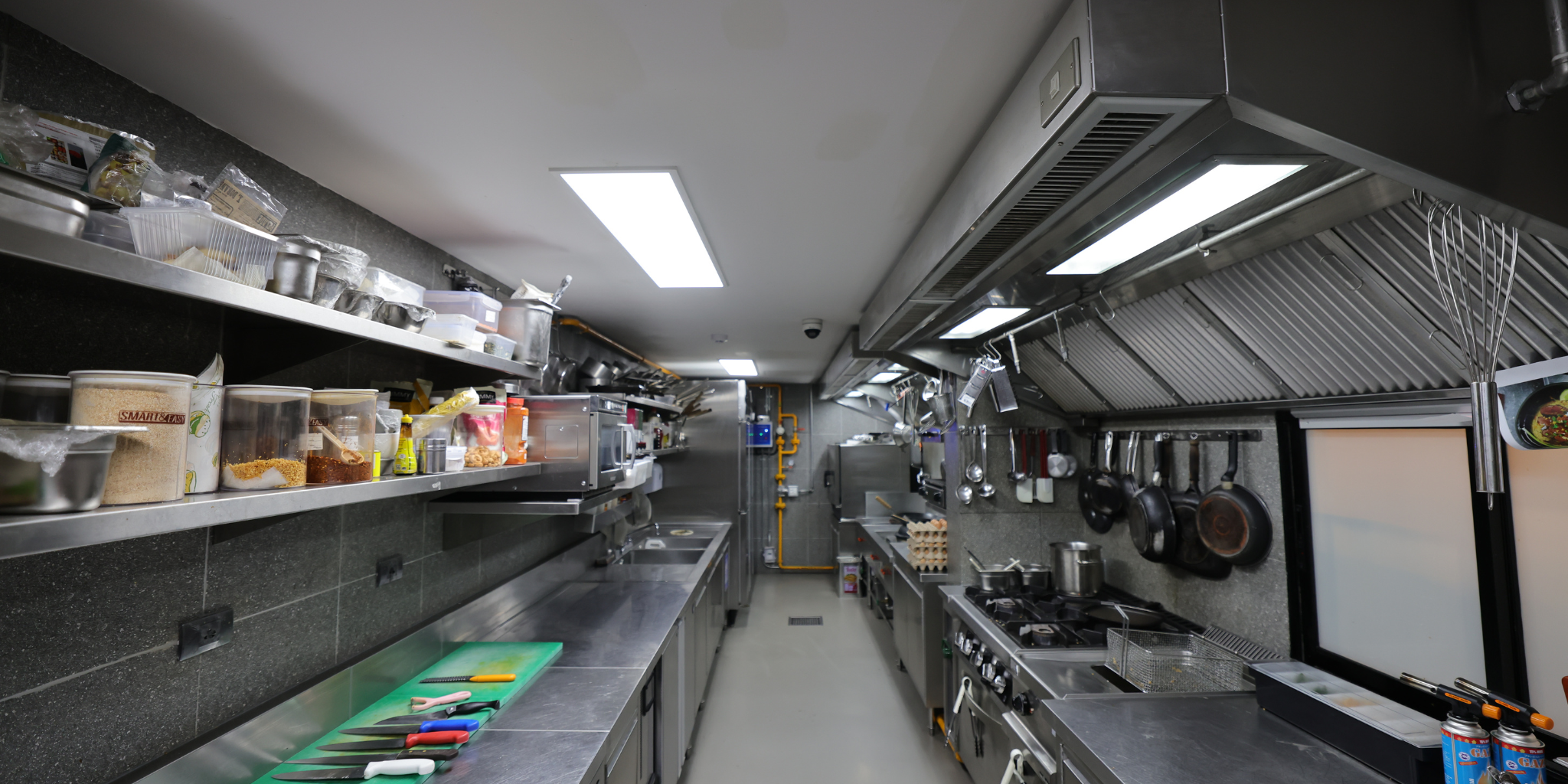
Grease build-up is a common issue in commercial kitchen exhaust systems. Every time cooking equipment is used, grease vapours and airborne cooking particles can enter the commercial range hood.
Over time, grease can accumulate on filters, canopy surfaces, ductwork and exhaust fans.
Frying, grilling, wok cooking and other high-temperature cooking processes can produce significant amounts of grease and vapour. Without suitable cleaning and maintenance, this residue can continue to build up.
What Causes Grease Build-Up in Commercial Range Hoods?
Several factors can contribute to grease accumulation in a commercial range hood.
1. High-Temperature Cooking
High-temperature cooking can produce more grease vapour and airborne cooking contaminants.
Common examples include:
- Deep frying
- Grilling
- Wok cooking
- Pan frying
- Chargrilling
- High-volume cooking
These cooking processes can place a greater load on the kitchen exhaust system.
2. Grease-Producing Cooking Equipment
Different appliances produce different levels of grease.
Deep fryers, grills and other grease-producing equipment can release cooking vapours that are captured by the exhaust canopy.
If filters are not cleaned regularly, grease can accumulate and reduce the effectiveness of the system.
3. Dirty or Blocked Filters
Grease filters are designed to capture grease before exhaust air moves through the duct system.
When filters become heavily loaded with grease, airflow can be affected.
Regular filter cleaning is therefore an important part of commercial range hood maintenance.
4. Insufficient Cleaning
Grease does not disappear after it enters the exhaust system.
It can accumulate on:
- Filters
- Canopy surfaces
- Internal ductwork
- Exhaust fans
- Other accessible exhaust components
A cleaning schedule should be established according to the type and volume of cooking.
5. Heavy Kitchen Workloads
A commercial kitchen operating for many hours each day can generate much more grease than a low-volume kitchen.
Restaurants, takeaway shops and commercial kitchens with continuous frying or grilling may therefore need more frequent cleaning.
6. Poorly Designed or Inadequate Extraction
The exhaust system should be designed around the cooking equipment and cooking processes.
If the canopy, filters, airflow or ductwork are not suitable for the cooking operation, smoke and grease vapours may not be captured effectively.
A correctly designed commercial exhaust canopy Melbourne can form part of a suitable commercial kitchen extraction system.
Why Is Grease Build-Up a Problem?
Grease accumulation is more than a cleaning issue.
Heavy grease deposits can:
- Affect exhaust performance
- Create unpleasant odours
- Increase maintenance requirements
- Make kitchen surfaces harder to clean
- Contribute to fire risk
- Reduce the effectiveness of filters
- Increase the need for professional cleaning
Commercial kitchens should take grease management seriously as part of their regular kitchen maintenance program.
Can Grease Build-Up Cause a Commercial Kitchen Fire?
Grease is combustible, so heavy accumulation within a commercial kitchen exhaust system can increase fire risk.
Potential ignition sources around cooking equipment can include:
- Open flames
- High cooking temperatures
- Sparks
- Electrical faults
- Hot cooking surfaces
If grease accumulates inside parts of the exhaust system, it can provide additional combustible material.
This is why regular cleaning and maintenance of commercial kitchen exhaust systems are important.
Where Does Grease Build Up?
Grease can accumulate in several areas of a commercial range hood system.
Grease Filters
Filters are positioned to capture grease from extracted air.
They should be cleaned at suitable intervals based on kitchen usage.
Canopy Surfaces
Grease can collect on the underside and internal surfaces of the exhaust canopy.
These surfaces should be cleaned as part of routine kitchen maintenance.
Exhaust Ductwork
Some grease can pass through filters and accumulate inside exhaust ductwork.
Duct cleaning requirements depend on the system and cooking operation.
Exhaust Fans
Grease and other contaminants can also affect exhaust fan components.
Regular inspection and servicing can help identify problems before they affect system performance.
Signs of Grease Build-Up in a Commercial Range Hood
Common warning signs include:
- Visible grease on filters
- Grease on canopy surfaces
- Grease dripping from the hood
- Strong cooking odours
- Smoke remaining in the kitchen
- Reduced extraction performance
- Excessive grease around exhaust components
If you notice significant grease accumulation or a sudden change in exhaust performance, arrange an inspection and cleaning as appropriate.
How Often Should a Commercial Range Hood Be Cleaned?
There is no single cleaning frequency that applies to every commercial kitchen.
The appropriate schedule depends on:
- Type of cooking
- Cooking volume
- Operating hours
- Amount of grease produced
- Exhaust system design
- Applicable maintenance requirements
High-volume kitchens with significant grease production may require more frequent cleaning than cafés or kitchens with lighter cooking.
A documented cleaning and maintenance schedule can help businesses keep track of routine servicing.
How to Prevent Grease Build-Up
A few practical steps can help reduce excessive grease accumulation.
Clean Filters Regularly
Grease filters should be cleaned according to the needs of the kitchen and the manufacturer’s or system requirements.
Keep the Canopy Clean
The canopy should be cleaned regularly so grease does not form thick deposits on accessible surfaces.
Maintain the Exhaust System
The exhaust fan, ductwork and other components should be inspected and maintained as required.
Use the Correct Exhaust System
The canopy and ventilation system should be suitable for the cooking equipment and cooking processes.
Keep Maintenance Records
Maintain records of cleaning, inspections and servicing where required.
This can help demonstrate that the exhaust system is being maintained as part of normal commercial kitchen operations.
Commercial Range Hood Maintenance Melbourne
Regular maintenance is particularly important for busy commercial kitchens.
A maintenance program can include:
- Filter cleaning
- Canopy cleaning
- Exhaust system inspection
- Fan servicing
- Duct inspection
- Grease accumulation checks
- Repairs when required
For general maintenance guidance, read our Commercial Range Hood Maintenance Tips for Melbourne Kitchens.
Does Grease Build-Up Affect Exhaust Performance?
Yes, heavy grease accumulation can affect parts of the exhaust system.
Dirty filters can restrict airflow, while grease accumulation in other components can increase maintenance requirements.
If smoke or cooking fumes are no longer being captured effectively, the exhaust system should be inspected.
When Should a Commercial Range Hood Be Inspected?
Consider arranging an inspection when you notice:
- Reduced airflow
- Persistent smoke
- Strong grease odours
- Grease dripping from the canopy
- Unusual fan noise
- Visible grease accumulation
- Changes in exhaust performance
Early attention can help identify maintenance issues before they become more difficult to address.
Commercial Exhaust Duct Cleaning
The exhaust duct is an important part of the commercial kitchen ventilation system.
Grease that passes through the filtration system can accumulate inside ductwork over time.
Ductwork should therefore be accessible for inspection and cleaning as required.
CGC Stainless Steel also provides commercial exhaust duct fabrication Melbourne services for commercial kitchen projects.
Choosing the Right Commercial Range Hood
Preventing excessive grease accumulation starts with a suitable exhaust system.
The system should be planned around:
- Cooking equipment
- Cooking volume
- Canopy dimensions
- Filters
- Exhaust airflow
- Ductwork
- Exhaust fan
- Maintenance access
A properly designed commercial kitchen exhaust system can help capture cooking contaminants effectively.
For a comparison of commercial range hoods and exhaust canopies, read Commercial Range Hood vs Commercial Exhaust Canopy.
Commercial Exhaust Canopy Melbourne
A commercial exhaust canopy is an important component of many commercial kitchen ventilation systems.
CGC Stainless Steel provides custom commercial exhaust canopy Melbourne solutions for restaurants, cafés, takeaway shops and commercial kitchens.
The canopy can be designed around the cooking equipment, available space and overall exhaust system.
Final Checklist for Grease Management
Commercial kitchens should regularly check:
- Filters are clean
- Canopy surfaces are free from heavy grease
- Exhaust performance is suitable
- Ductwork is inspected as required
- Exhaust fans are maintained
- Grease accumulation is monitored
- Cleaning records are maintained
- Repairs are completed when required
- The exhaust system remains suitable for the cooking operation
Final Thoughts
Grease build-up in commercial range hoods is caused by cooking vapours, grease-producing equipment, high kitchen workloads, dirty filters and inadequate cleaning.
Regular cleaning and maintenance can help control grease accumulation and keep the commercial kitchen exhaust system operating effectively.
If your Melbourne commercial kitchen needs a new or custom exhaust canopy, view our commercial exhaust canopy Melbourne service or contact CGC Stainless Steel to discuss your project.
Frequently Asked Questions
What causes grease build-up in commercial range hoods?
Grease build-up is mainly caused by grease vapours produced during cooking. Frying, grilling, wok cooking and other high-temperature processes can produce significant grease that enters the exhaust system.
How do I prevent grease build-up in a commercial range hood?
Regular filter cleaning, canopy cleaning, exhaust system maintenance and appropriate duct inspection can help control grease accumulation.
Can grease build-up cause a kitchen fire?
Heavy grease accumulation can increase fire risk because grease is combustible. Regular cleaning and maintenance are important parts of commercial kitchen safety.
How often should commercial range hood filters be cleaned?
The required frequency depends on cooking type, kitchen workload and grease production. High-volume kitchens may need more frequent filter cleaning.
Does grease affect commercial range hood airflow?
Heavy grease accumulation and dirty filters can affect airflow and exhaust performance.
Does grease build up inside commercial exhaust ducts?
Yes. Grease can accumulate inside exhaust ductwork over time, particularly in kitchens with high levels of grease-producing cooking.
What are the signs of excessive grease build-up?
Signs can include visible grease on filters or canopy surfaces, dripping grease, strong odours, persistent smoke and reduced exhaust performance.
Do commercial exhaust canopies need regular cleaning?
Yes. Commercial exhaust canopies should be cleaned and maintained according to the cooking operation and applicable maintenance requirements.
Can CGC Stainless Steel provide a commercial exhaust canopy in Melbourne?
Yes. CGC Stainless Steel provides custom commercial exhaust canopy solutions for commercial kitchens in Melbourne.
What should I do if my commercial range hood is not extracting properly?
Check whether filters are heavily soiled and arrange appropriate inspection or servicing if the problem continues. Persistent extraction problems may require assessment of the complete ventilation system.