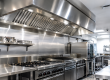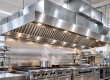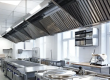
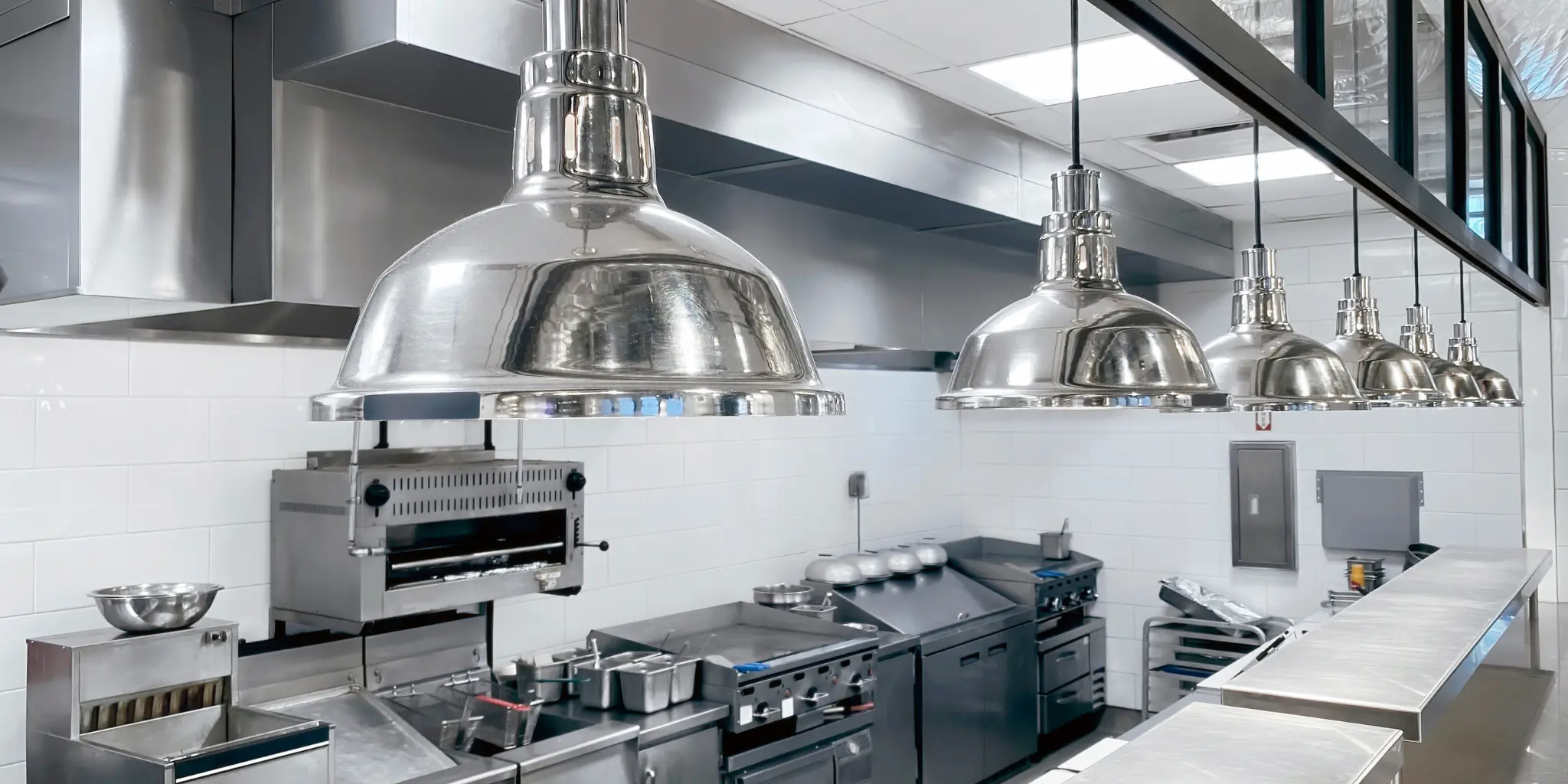
Small restaurants in Melbourne often have to make the most of limited kitchen space while managing heat, smoke, grease, steam and cooking odours.
A commercial range hood needs to suit the cooking equipment, kitchen layout and available space. Choosing a hood simply because it fits above the cooking line may not provide the capture and ventilation performance the kitchen requires.
This guide explains the main commercial range hood options for small restaurants in Melbourne and what to consider before choosing one.
Why Small Restaurants Need the Right Commercial Range Hood
Compact commercial kitchens can face several ventilation challenges, including:
-
Limited ceiling height
-
Narrow cooking lines
-
Restricted duct routes
-
High cooking output
-
Limited workspace
-
Poor natural airflow
-
Grease and smoke accumulation
-
Heat and steam
The right commercial range hood should be selected around the cooking equipment and the complete ventilation system.
What Is a Commercial Range Hood?
A commercial range hood is part of a kitchen extraction system designed to capture and remove heat, smoke, grease, steam and cooking fumes.
A commercial range hood may work with:
-
Grease filters
-
Exhaust ductwork
-
Exhaust fans
-
Discharge outlets
-
Replacement or makeup air
-
Other ventilation components
The hood is only one part of the complete commercial kitchen ventilation system.
Best Commercial Range Hood Options for Small Restaurants
Different small restaurants have different cooking requirements.
The most suitable hood depends on the cooking equipment, kitchen layout, available space and ventilation design.
1. Wall-Mounted Commercial Exhaust Canopy
A wall-mounted canopy can be suitable when cooking equipment is positioned against a wall.
It can make good use of available wall space while providing coverage over the cooking line.
This type of setup may suit:
-
Small cafés
-
Takeaway shops
-
Compact restaurants
-
Wall-positioned cooking equipment
The canopy dimensions should be based on the actual cooking equipment and required capture area.
For Melbourne businesses, see our commercial exhaust canopy Melbourne service.
2. Low-Profile Commercial Range Hood
A low-profile design may be considered where ceiling height or available space is restricted.
It can provide extraction above a compact cooking line without taking up unnecessary space.
Before selecting a low-profile hood, consider the cooking equipment, installation height, airflow requirements and duct route.
3. Island Commercial Exhaust Canopy
Some small restaurants use a central cooking line rather than placing equipment against a wall.
An island-style exhaust canopy can provide capture around a central cooking area.
This option may suit:
-
Open kitchens
-
Visible cooking stations
-
Central cooking lines
-
Restaurant layouts where equipment is positioned away from walls
The canopy needs to be designed around the cooking equipment and the required capture area.
4. Commercial Canopy for Steam-Heavy Cooking
Restaurants that produce significant amounts of steam may require a ventilation system designed specifically around the cooking process.
Examples can include:
-
Noodle restaurants
-
Dumpling restaurants
-
Asian kitchens
-
Pasta kitchens
-
Boiling stations
-
Steaming stations
Steam management should be considered alongside the complete ventilation system.
5. Commercial Range Hood for Grease-Heavy Cooking
Frying, grilling and high-temperature cooking can generate significant grease and smoke.
Small restaurants with these cooking processes need a suitable extraction and filtration system.
Examples include:
-
Burger restaurants
-
Grill restaurants
-
Fried-food businesses
-
Commercial kitchens using deep fryers
-
High-temperature cooking stations
The filter and exhaust system should be selected according to the actual cooking operation.
How to Choose a Commercial Range Hood for a Small Restaurant
1. Measure the Available Space
Start by measuring:
-
Kitchen width
-
Kitchen height
-
Cooking line dimensions
-
Ceiling height
-
Wall positions
-
Available duct route
Small kitchens often benefit from custom fabrication because standard dimensions may not suit the available space.
2. Identify Your Cooking Equipment
Make a complete list of the equipment that will operate underneath the hood.
This could include:
-
Fryers
-
Grills
-
Ovens
-
Griddles
-
Cooktops
-
Woks
-
Other commercial cooking equipment
Different appliances produce different levels of heat, grease, smoke and steam.
3. Consider the Cooking Load
A small kitchen does not necessarily have a small ventilation requirement.
A compact restaurant cooking large volumes of fried or grilled food may require a more substantial extraction system than a larger kitchen with lighter cooking.
The ventilation system should therefore be based on the cooking process rather than floor area alone.
4. Consider the Duct Route
The duct route is particularly important in small restaurants.
Before ordering a commercial range hood, check:
-
Where the duct can run
-
Available ceiling space
-
Building structure
-
Access for installation
-
Exhaust discharge location
-
Maintenance access
For custom commercial exhaust duct fabrication, see our commercial exhaust duct fabrication Melbourne service.
5. Choose Appropriate Filtration
Grease filters help capture grease and other contaminants before exhaust air moves into the duct system.
Filter selection depends on the cooking equipment and ventilation design.
Filters also require regular cleaning and maintenance.
6. Consider Noise
Small kitchens have limited space, so noise from exhaust fans and ventilation equipment can be more noticeable.
Fan and system selection should consider:
-
Kitchen size
-
Fan location
-
Duct configuration
-
Airflow requirements
-
Noise levels
The complete system should be assessed rather than choosing equipment based on noise rating alone.
7. Consider Replacement Air
A commercial exhaust system removes air from the kitchen.
Replacement or makeup air may need to be considered so the kitchen does not develop excessive negative pressure.
The appropriate approach depends on the building and ventilation design.
8. Plan for Cleaning and Maintenance
Commercial range hoods operate in environments where grease, smoke and food particles are present.
Your system should provide suitable access for:
-
Filter cleaning
-
Fan maintenance
-
Duct inspection
-
Surface cleaning
-
General servicing
Regular maintenance can help keep the system operating as intended.
Why Custom Commercial Range Hoods Can Suit Small Restaurants
Small restaurant kitchens rarely have identical layouts.
You may have:
-
Low ceilings
-
Narrow walls
-
Unusual equipment arrangements
-
Restricted duct routes
-
Limited workspace
-
Structural obstacles
A custom commercial range hood can be fabricated around the available kitchen space.
This can help the hood work with the actual cooking line instead of requiring the restaurant to redesign the kitchen around a standard unit.
Commercial Range Hood vs Commercial Exhaust Canopy
Commercial range hood and commercial exhaust canopy are terms that are often used interchangeably.
The more important issue is how the extraction system captures cooking contaminants and transfers them through the exhaust system.
The canopy, filters, ductwork and exhaust fan should be considered together.
For a detailed comparison, read Commercial Range Hood vs Commercial Exhaust Canopy: What’s the Difference?.
Commercial Kitchen Ventilation for Melbourne Restaurants
A commercial range hood should be planned as part of the complete kitchen ventilation system.
The project may need to consider:
-
Cooking equipment
-
Canopy dimensions
-
Exhaust ducting
-
Exhaust fan
-
Air replacement
-
Discharge location
-
Building requirements
-
Maintenance access
Melbourne restaurants should have their proposed ventilation system assessed against the requirements applicable to their premises and cooking operation.
Commercial Exhaust Canopy Melbourne
For many small restaurants, the commercial range hood forms part of a stainless steel exhaust canopy system.
CGC Stainless Steel provides custom commercial exhaust canopy Melbourne solutions for restaurants, cafés, takeaway shops and commercial kitchens.
The canopy can be planned around the cooking equipment, kitchen layout and exhaust duct route.
Commercial Range Hood Installation Melbourne
Installation should be planned before fabrication begins.
The installer and relevant professionals may need to consider:
-
Hood position
-
Cooking equipment
-
Installation height
-
Duct route
-
Exhaust fan
-
Discharge location
-
Ceiling structure
-
Access for maintenance
Avoid selecting a hood before checking how the complete ventilation system will fit within the premises.
How Much Space Does a Small Restaurant Range Hood Need?
There is no single space requirement for every commercial range hood.
The required dimensions depend on:
-
Cooking equipment
-
Hood dimensions
-
Installation height
-
Cooking processes
-
Kitchen layout
-
Duct configuration
-
Ventilation requirements
A custom assessment is preferable when the kitchen has limited space or unusual dimensions.
Commercial Range Hood Maintenance
Even a well-designed range hood requires regular maintenance.
Small restaurants should establish a maintenance routine that includes:
-
Regular filter cleaning
-
Surface cleaning
-
Checking for grease accumulation
-
Inspecting accessible components
-
Servicing exhaust fans when required
-
Checking ductwork as appropriate
The cleaning frequency depends on the type and volume of cooking.
When Should You Choose a Custom Range Hood?
A custom range hood may be appropriate when:
-
Standard sizes do not fit
-
The cooking line has unusual dimensions
-
Ceiling height is restricted
-
The duct route is difficult
-
Multiple appliances need to be covered
-
The kitchen has limited workspace
-
The hood needs to integrate with existing stainless steel fabrication
Custom fabrication can be planned around the actual restaurant layout.
Choosing a Commercial Range Hood for Your Melbourne Restaurant
The best commercial range hood is not necessarily the largest or most powerful option.
It needs to suit the cooking equipment, kitchen dimensions, duct route, ventilation requirements and available space.
For a small restaurant in Melbourne, custom fabrication may provide a more suitable solution where standard equipment does not fit the kitchen.
CGC Stainless Steel provides commercial exhaust canopy and stainless steel fabrication services for Melbourne commercial kitchens.
View commercial exhaust canopy Melbourne or contact CGC Stainless Steel to discuss your project.
Frequently Asked Questions
What is the best commercial range hood for a small restaurant?
The best option depends on the cooking equipment, kitchen layout, available space, cooking load, duct route and ventilation requirements.
Do small restaurants need commercial exhaust canopies?
If the cooking operation produces heat, smoke, grease or cooking fumes that need mechanical extraction, a suitable commercial exhaust system may be required. The exact system depends on the premises and cooking operation.
Can a commercial range hood be custom made?
Yes. Custom commercial range hoods and exhaust canopies can be fabricated to suit specific kitchen dimensions and cooking equipment.
What size commercial range hood does a small restaurant need?
The required size depends on the cooking equipment, equipment arrangement, hood height and ventilation design. Floor area alone does not determine the required hood size.
Do commercial range hoods need ducting?
A commercial hood that exhausts contaminated air outside generally forms part of a ducted exhaust system.
What type of commercial range hood is best for frying?
Frying produces grease and heat, so the extraction and filtration system should be designed around the cooking equipment and cooking load.
Are commercial range hoods noisy?
Noise depends on the exhaust fan, airflow, duct configuration and installation. The complete ventilation system should be considered when selecting equipment.
What is the difference between a range hood and an exhaust canopy?
The terms are often used interchangeably. In commercial kitchens, the important factor is the design of the complete extraction system, including the canopy, filters, ductwork and exhaust fan.
Where can I get a commercial range hood in Melbourne?
CGC Stainless Steel provides custom commercial exhaust canopy and stainless steel fabrication solutions for commercial kitchens in Melbourne.
Can CGC Stainless Steel make a custom range hood for a small restaurant?
Yes. Custom stainless steel exhaust canopies can be fabricated around the kitchen layout, cooking equipment and available installation space.