Planning a commercial kitchen involves more than choosing cooking equipment. The position of appliances in relation to the ventilation system can affect how effectively heat, steam, smoke, grease and cooking odours are managed.
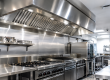
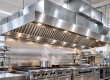
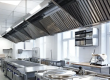
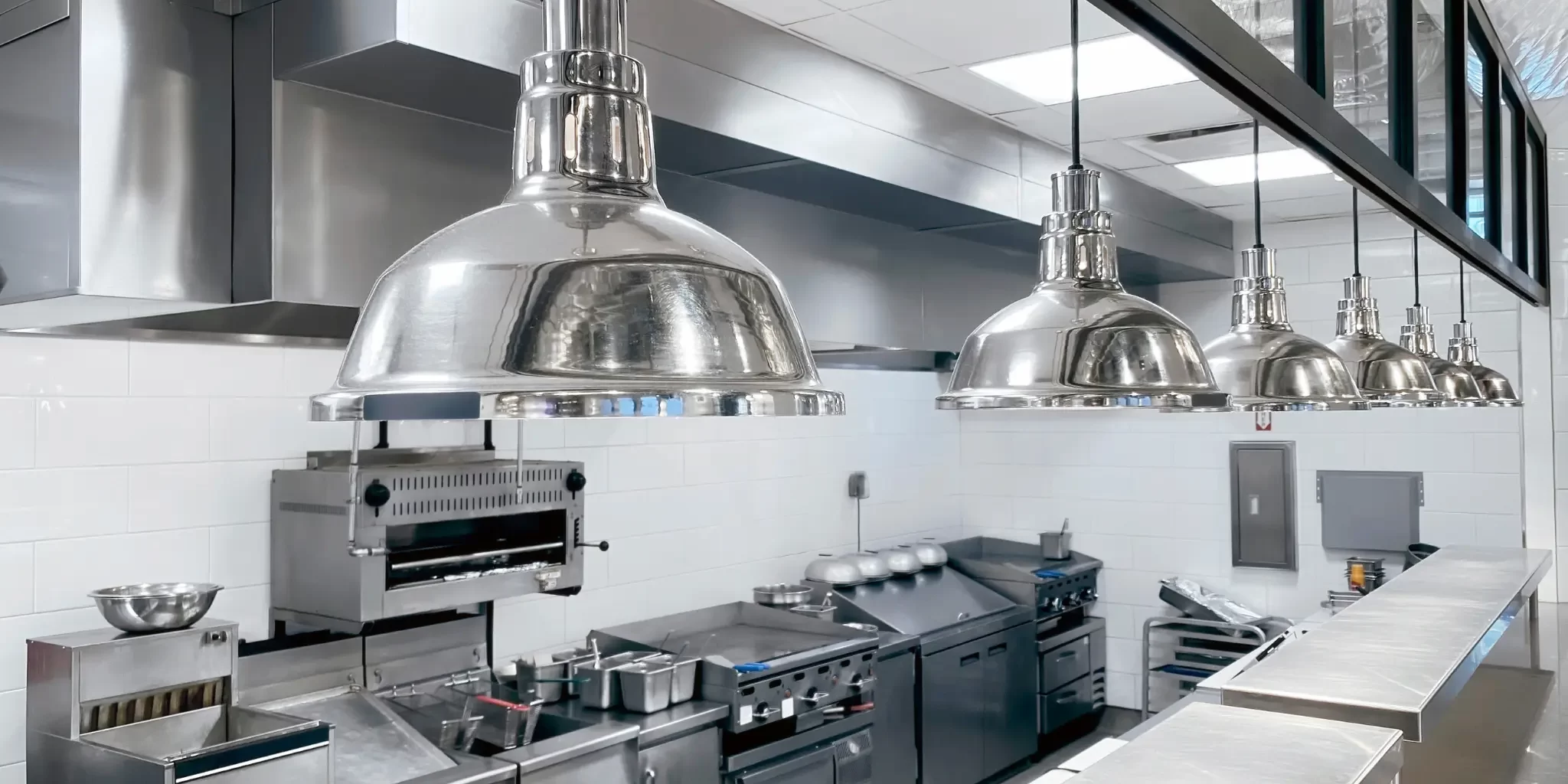
A commercial kitchen exhaust canopy is commonly positioned above cooking and other equipment that produces heat, vapour, smoke or grease.
The exact ventilation requirements depend on the type of appliance, its output, kitchen layout and applicable requirements.
This guide explains which types of commercial kitchen equipment may be positioned under an exhaust canopy and what to consider when planning the layout.
Why Does Commercial Kitchen Equipment Need Ventilation?
Commercial cooking equipment can produce different types of airborne emissions.
Depending on the appliance, these may include:
- Heat
- Steam
- Smoke
- Grease vapour
- Cooking odours
- Combustion products
A properly designed commercial kitchen ventilation system helps manage these emissions and supports a more comfortable working environment.
The ventilation system should be designed around the equipment being used rather than treating every appliance in exactly the same way.
What Equipment Goes Under a Commercial Exhaust Canopy?
Different commercial kitchens use different combinations of appliances.
Common equipment that may require canopy ventilation includes cooking ranges, deep fryers, grills, charbroilers, ovens, wok ranges, steam-producing equipment and other heat-producing appliances.
Let’s look at some common examples.
1. Commercial Ranges and Stoves
Commercial ranges and stoves are common sources of heat and cooking emissions.
Gas and electric cooking equipment can generate heat, steam, smoke and cooking odours depending on the food being prepared.
Positioning appropriate cooking equipment beneath a correctly designed canopy can help capture these emissions.
When planning a range installation, consider:
- Appliance dimensions
- Heat output
- Cooking process
- Canopy dimensions
- Required clearance
- Air movement
- Kitchen layout
2. Deep Fryers
Deep fryers can generate significant grease vapour and heat during operation.
Because of this, fryer placement should be considered carefully when planning the commercial kitchen exhaust system.
The ventilation design should account for the type and intensity of cooking taking place.
Regular cleaning of filters and other ventilation components is also important for maintaining the system.
3. Charbroilers and Grills
Charbroilers and grills can produce substantial smoke, heat and grease during cooking.
Grilling operations may require a ventilation system designed specifically around the cooking equipment and its output.
When planning a canopy above grills, consider:
- Cooking temperature
- Smoke production
- Grease generation
- Appliance dimensions
- Canopy coverage
- Airflow requirements
4. Commercial Ovens
Commercial ovens produce heat and may also produce steam, smoke and cooking odours depending on the food and cooking process.
Some ovens may require ventilation directly above the equipment, while the requirements can vary according to the type of oven and how it is used.
Commercial kitchens should assess the appliance specifications before finalising the exhaust canopy design.
5. Combi Ovens
Combi ovens can generate heat and steam, particularly when operating in steam or combination cooking modes.
The ventilation arrangement should account for the amount of vapour generated and the location of the equipment.
When planning a commercial kitchen, consider the relationship between the combi oven, canopy and surrounding equipment.
6. Steamers
Commercial steamers produce significant amounts of steam.
If steam is allowed to accumulate, it can affect visibility, surfaces and the working environment.
The ventilation system should be designed according to the type of steamer and its steam output.
7. Braising Pans
Braising pans can generate heat, steam and cooking odours.
They are commonly used for large-volume commercial food preparation and should be considered when planning the overall kitchen ventilation system.
The canopy design should take account of the equipment dimensions and the cooking processes being carried out.
8. Wok Ranges
Wok cooking can produce high levels of heat, steam, smoke and grease.
This is particularly relevant in kitchens preparing food at high temperatures.
Wok ranges should be included in the ventilation planning from the beginning rather than added to the system after the canopy has been designed.
9. Commercial Dishwashers
Commercial dishwashers can release substantial amounts of steam when doors are opened after a wash cycle.
Ventilation requirements for dishwashing areas differ from those for heavy cooking equipment.
Depending on the equipment and kitchen design, a dedicated ventilation arrangement may be appropriate.
The dishwasher manufacturer’s requirements and the overall kitchen ventilation design should be considered before installation.
10. Other Heat-Producing Equipment
Commercial kitchens can contain many other appliances that produce heat, steam or cooking emissions.
Examples may include:
- Hot plates
- Griddles
- Salamanders
- Pasta cookers
- Tilting pans
- Cooking kettles
- Other specialist cooking equipment
Whether a particular appliance needs to be located under a canopy depends on its operation, emissions and applicable ventilation requirements.
How Do You Know What Needs to Be Under the Canopy?
The easiest way to plan the ventilation system is to create an equipment schedule before the canopy is fabricated.
List every appliance that will be installed in the cooking area.
For each appliance, record:
- Appliance type
- Width
- Depth
- Height
- Heat output
- Fuel type
- Cooking process
- Steam production
- Smoke production
- Grease production
- Manufacturer requirements
This information can then be considered when determining the appropriate canopy configuration.
Can Every Commercial Appliance Go Under the Same Hood?
Not necessarily.
Different appliances produce different levels and types of emissions.
A deep fryer, wok range, dishwasher and preparation bench do not have the same ventilation requirements.
The exhaust canopy and associated ventilation system should therefore be designed around the actual equipment and cooking processes.
This is one reason it is useful to involve the ventilation and fabrication team before finalising the kitchen layout.
What Happens If the Canopy Is Too Small?
A canopy needs to provide suitable coverage for the equipment and cooking processes it is intended to ventilate.
If the canopy does not adequately cover the relevant equipment, smoke, heat and grease may escape into the kitchen.
The final design should consider:
- Equipment arrangement
- Canopy dimensions
- Overhang
- Appliance output
- Airflow
- Kitchen layout
- Installation requirements
The exact design should be determined for the individual kitchen rather than based on a one-size-fits-all approach.
Does Canopy Placement Matter?
Yes.
The position of the canopy in relation to the cooking equipment can affect capture performance.
Equipment should be arranged so that the ventilation system can effectively manage the emissions generated during operation.
Kitchen designers and ventilation specialists should consider the canopy location before appliances are permanently installed.
What About Grease Filters?
Grease-producing appliances can place additional demands on the ventilation system.
Suitable filtration can help capture grease particles before air passes further through the exhaust system.
Filters also require regular cleaning and maintenance.
A maintenance schedule should be established according to the equipment, kitchen use and manufacturer’s recommendations.
What About Steam?
Steam-producing appliances require careful ventilation planning.
Steam can come from:
- Combi ovens
- Steamers
- Boiling equipment
- Dishwashers
- Braising equipment
- Other cooking processes
The ventilation system should account for the quantity and location of steam being produced.
What About Smoke and Cooking Odours?
Grills, charbroilers, wok ranges and some cooking processes can generate substantial smoke and odours.
A suitable exhaust system helps remove airborne contaminants from the cooking area.
The system should be designed around the actual cooking equipment and expected usage rather than relying only on the size of the kitchen.
Commercial Kitchen Exhaust Canopy Design
A commercial kitchen exhaust canopy is part of a larger ventilation system.
The overall design may need to consider:
- Canopy size
- Appliance arrangement
- Filters
- Exhaust ductwork
- Exhaust fan
- Airflow
- Make-up air
- Access for cleaning
- Maintenance
- Applicable requirements
This means the canopy should not be treated as an isolated piece of stainless steel equipment.
For information about ductwork, see:
commercial exhaust duct fabrication Melbourne
Commercial Exhaust Canopy Brisbane
If you are fitting out a restaurant, café, takeaway shop or commercial kitchen in Brisbane, the canopy should be planned around the actual cooking equipment.
CGC Stainless Steel provides commercial exhaust canopy solutions in Brisbane.
commercial exhaust canopy Brisbane
Discussing the equipment schedule before fabrication can help ensure that the canopy design is suitable for the intended kitchen layout.
Commercial Exhaust Canopy Melbourne
Commercial kitchens in Melbourne also need ventilation systems designed around the appliances and cooking processes being used.
CGC Stainless Steel provides commercial exhaust canopy fabrication in Melbourne for commercial kitchen applications.
commercial exhaust canopy Melbourne
The canopy can be planned around the equipment layout, available space and project requirements.
What Should You Tell Your Exhaust Canopy Fabricator?
Before requesting a quote, provide as much information about the kitchen as possible.
Useful information includes:
- Kitchen floor plan
- Equipment schedule
- Appliance dimensions
- Cooking methods
- Fuel types
- Location of cooking equipment
- Ceiling height
- Available installation space
- Existing ductwork
- Existing exhaust fan
- Photos of the installation area
The more accurate the information, the easier it is to assess the proposed canopy configuration.
Final Checklist for Commercial Kitchen Ventilation
Before finalising the exhaust canopy, check:
- Have all cooking appliances been identified?
- Are high-heat appliances included?
- Are fryers included?
- Are grills or charbroilers included?
- Are wok ranges included?
- Are steam-producing appliances included?
- Has dishwasher steam been considered?
- Are canopy dimensions suitable for the equipment?
- Has ductwork been considered?
- Is exhaust fan capacity being assessed?
- Is access for maintenance available?
- Has the overall kitchen layout been reviewed?
Get Help With Your Commercial Exhaust Canopy
The equipment under the canopy plays an important role in determining the ventilation design.
Whether your kitchen includes fryers, grills, ovens, wok ranges, steamers or other commercial cooking equipment, the exhaust canopy should be planned around the actual appliances and cooking processes.
CGC Stainless Steel provides commercial exhaust canopy fabrication for commercial kitchens in Melbourne and Brisbane.
If you are planning a new kitchen or replacing an existing exhaust canopy, provide your equipment list and kitchen details to the fabrication team.
Frequently Asked Questions
What equipment should be under a commercial kitchen exhaust canopy?
Common examples include commercial ranges, fryers, grills, charbroilers, ovens, wok ranges, steamers and other equipment that produces significant heat, steam, smoke or grease.
Do deep fryers need to be under an exhaust canopy?
Deep fryers can produce substantial heat and grease vapour, so their ventilation requirements should be considered when designing the commercial kitchen exhaust system.
Do commercial ovens need an exhaust hood?
The ventilation requirements depend on the type of oven, cooking process and emissions produced. The appliance specifications should be considered when designing the kitchen ventilation system.
Do wok ranges need commercial kitchen ventilation?
Wok cooking can generate high levels of heat, steam, smoke and grease, so wok ranges should be included in the ventilation design.
Does a commercial dishwasher need an exhaust canopy?
Commercial dishwashers can generate significant steam. The appropriate ventilation arrangement depends on the dishwasher, its operation and the kitchen design.
Can a commercial exhaust canopy cover multiple appliances?
Yes, a canopy can be designed to serve multiple appliances when the dimensions, equipment arrangement and ventilation requirements are suitable.
What information is needed to design a commercial exhaust canopy?
Useful information includes the kitchen layout, equipment list, appliance dimensions, cooking processes, fuel types, ceiling height and existing ventilation infrastructure.
Can CGC Stainless Steel install commercial exhaust canopies in Brisbane?
CGC Stainless Steel provides commercial exhaust canopy solutions in Brisbane. The appropriate configuration depends on the kitchen equipment and project requirements.
Can CGC Stainless Steel provide commercial exhaust canopies in Melbourne?
Yes. CGC Stainless Steel provides commercial exhaust canopy fabrication in Melbourne for commercial kitchen applications.