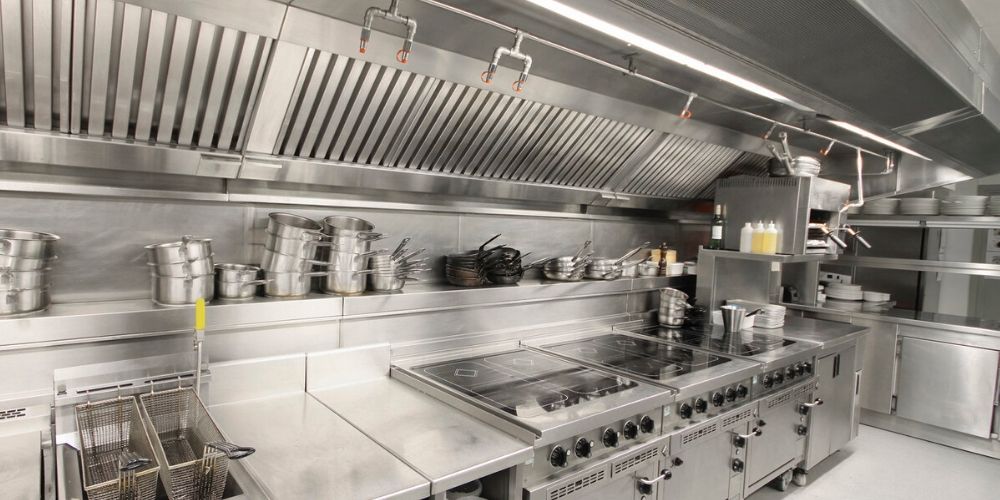
How to Choose the Right Commercial Exhaust Hood System
Choosing the right commercial exhaust hood system is an important part of planning a restaurant, café, takeaway shop, hotel or other commercial kitchen.
The exhaust hood needs to work with the cooking equipment, kitchen layout, filtration system, ductwork and exhaust fan. Choosing a hood based only on its size or appearance can result in poor capture of smoke, grease, heat and cooking vapours.
This guide explains the main factors to consider when choosing a commercial exhaust hood system for a commercial kitchen.
What Is a Commercial Exhaust Hood System?
A commercial exhaust hood system is designed to capture and remove airborne contaminants produced during cooking.
Depending on the kitchen, a complete system may include:
-
Commercial exhaust hood or canopy
-
Grease filters
-
Exhaust ductwork
-
Exhaust fan
-
Make-up or replacement air
-
External discharge components
The exact configuration depends on the cooking equipment, kitchen layout, building and ventilation requirements.
For businesses that need a custom exhaust canopy, see our commercial exhaust canopy Melbourne service.
commercial exhaust canopy Melbourne
1. Identify the Type of Cooking You Do
The cooking process is one of the main factors when selecting an exhaust hood.
Different appliances can produce different amounts of heat, smoke, grease and steam.
Consider whether the kitchen uses:
-
Deep fryers
-
Grills
-
Chargrills
-
Wok burners
-
Commercial ranges
-
Ovens
-
Boiling equipment
-
Steamers
-
Combination cooking equipment
Heavy frying and grilling can generate more grease and smoke than lighter cooking processes, so the extraction system needs to be suitable for the cooking load.
2. Consider the Size of the Cooking Area
The exhaust hood needs to provide suitable coverage over the cooking equipment.
Before selecting a hood, consider:
-
Width of the cooking line
-
Depth of the cooking equipment
-
Position of appliances
-
Available ceiling space
-
Wall position
-
Required clearance
-
Duct connection location
An undersized hood may not capture cooking emissions effectively.
A hood that is larger than necessary can increase material, installation and operating requirements.
The hood should therefore be designed around the actual cooking equipment rather than selected by size alone.
3. Choose the Right Hood or Canopy Configuration
Commercial kitchens can use different hood and canopy configurations depending on the layout.
Wall-Mounted Exhaust Hood
A wall-mounted hood is positioned against a wall and is commonly used when cooking equipment is arranged along a kitchen wall.
Island Exhaust Canopy
An island canopy is designed for cooking equipment positioned away from the wall.
Custom Exhaust Canopy
Custom fabrication can be useful when the kitchen has unusual dimensions, limited space or specific equipment requirements.
CGC Stainless Steel provides custom commercial exhaust canopy fabrication for commercial kitchens.
For Brisbane businesses, see our dedicated commercial exhaust canopy Brisbane service.
commercial exhaust canopy Brisbane
4. Consider Grease Filtration
Grease filtration is an important part of many commercial kitchen extraction systems.
Cooking processes can produce grease-laden vapours that enter the exhaust system.
Filters help capture grease before the extracted air moves through the ductwork.
The appropriate filter arrangement depends on the cooking equipment and extraction design.
Filters should also be easy to remove for regular cleaning and maintenance.
5. Plan the Exhaust Ductwork
The hood is only one part of the ventilation system.
Captured air needs to travel through exhaust ductwork to the discharge point.
When planning ductwork, consider:
-
Duct route
-
Available ceiling or roof space
-
Building structure
-
Number of bends
-
Connection points
-
Maintenance access
-
External discharge location
CGC Stainless Steel provides custom commercial exhaust duct fabrication.
Planning the hood and ductwork together can help create a more suitable extraction system.
6. Select a Suitable Exhaust Fan
The exhaust fan moves extracted air through the ventilation system.
Fan selection should be considered alongside:
-
Hood dimensions
-
Cooking equipment
-
Required airflow
-
Ductwork
-
System configuration
-
External discharge
Choosing an exhaust fan separately from the rest of the system can result in an unsuitable setup.
If an existing commercial exhaust fan is not working correctly, CGC Stainless Steel also provides commercial exhaust fan repairs Brisbane.
commercial exhaust fan repairs Brisbane
7. Consider Make-Up Air
A commercial exhaust system removes air from the kitchen.
Depending on the building and ventilation design, replacement or make-up air may need to be considered to help maintain suitable airflow.
The amount and method of replacement air depend on the individual project.
A ventilation professional can assess the kitchen layout and extraction system to determine the appropriate arrangement.
8. Think About Kitchen Layout
The location of the exhaust hood can affect how effectively the system captures cooking emissions.
When planning the kitchen, consider:
-
Cooking equipment location
-
Staff movement
-
Preparation benches
-
Doors
-
Windows
-
Air-conditioning outlets
-
Other ventilation openings
-
Available ceiling space
The hood should be positioned to suit the cooking line and the overall kitchen layout.
9. Consider Noise
Exhaust fans and ventilation systems can produce operating noise.
This may be particularly noticeable in:
-
Open kitchens
-
Cafés
-
Restaurants
-
Small commercial kitchens
-
Kitchens located close to dining areas
When selecting an exhaust system, consider fan location, equipment specifications and the overall system design.
10. Choose Suitable Materials
Stainless steel is commonly used for commercial kitchen exhaust hoods and canopies.
It provides a durable surface that is suitable for commercial kitchen environments and can be cleaned regularly.
Material selection should take into account:
-
Intended use
-
Moisture exposure
-
Cleaning requirements
-
Temperature
-
Environmental conditions
-
Required finish
For custom stainless steel fabrication, see our custom stainless steel fabrication service.
custom stainless steel fabrication
11. Plan for Cleaning and Maintenance
A commercial exhaust hood requires ongoing cleaning and maintenance.
Before choosing a system, consider how easily staff or maintenance personnel can access:
-
Filters
-
Hood surfaces
-
Duct access points
-
Exhaust fans
-
Other ventilation components
Filters should be accessible for regular cleaning.
The wider extraction system should also have suitable access for inspection and maintenance.
12. Consider Fire and Ventilation Requirements
Commercial kitchen extraction systems can be subject to building, ventilation and fire-safety requirements.
The exact requirements depend on the project, building, cooking equipment and location.
Before installation, the system should be assessed against the requirements that apply to the specific commercial kitchen.
For Brisbane businesses, our guide to commercial kitchen ventilation requirements Brisbane provides more information about the factors that need to be considered.
[LINK: commercial kitchen ventilation requirements Brisbane → https://cgcstainlesssteel.com.au/commercial-kitchen-ventilation-requirements-brisbane-a-guide-for-restaurants-cafes-and-commercial-kitchens/]
13. Think About Installation Access
Large exhaust hoods, ductwork and fans need to be transported and installed at the site.
Before fabrication begins, consider:
-
Doorway sizes
-
Building access
-
Ceiling access
-
Roof access
-
Equipment already installed
-
Installation sequence
-
Available working space
These details can affect how the system is fabricated and installed.
14. Choose Custom Fabrication When Standard Sizes Do Not Fit
Standard products can be suitable when their dimensions match the kitchen.
Custom fabrication may be more suitable when:
-
The kitchen has limited space
-
Cooking equipment has unusual dimensions
-
The hood needs a specific configuration
-
The duct route is complicated
-
Existing structures affect installation
-
Multiple components need to work together
Custom fabrication allows the exhaust hood to be designed around the actual kitchen rather than forcing the kitchen to fit a standard product.
15. Consider the Complete Extraction System
One of the most common planning mistakes is choosing the exhaust hood without considering the rest of the system.
A commercial extraction setup can include:
Cooking equipment → Exhaust hood/canopy → Filters → Ductwork → Exhaust fan → External discharge
The components need to work together.
A suitable hood with poorly planned ductwork or an unsuitable fan may not provide the intended extraction performance.
Commercial Exhaust Hood vs Commercial Exhaust Canopy
The terms commercial exhaust hood and commercial exhaust canopy are sometimes used interchangeably.
In practical terms, both refer to extraction equipment positioned above commercial cooking equipment, but the exact terminology can vary between suppliers and projects.
The wider ventilation system can also include filters, ductwork, exhaust fans and replacement air.
For a detailed comparison, read:
[LINK: Commercial Range Hood vs Commercial Exhaust Canopy: What’s the Difference? → https://cgcstainlesssteel.com.au/commercial-range-hood-vs-commercial-exhaust-canopy-whats-the-difference/]
Commercial Exhaust Hood Systems for Restaurants and Cafés
Restaurants and cafés can have very different cooking requirements.
A café with limited cooking equipment may need a different extraction configuration from a restaurant using:
-
Multiple fryers
-
Grills
-
Wok burners
-
Ovens
-
Chargrills
-
High-volume cooking equipment
The extraction system should therefore be based on the actual menu, equipment and kitchen layout.
Commercial Exhaust Hood Systems for Brisbane Kitchens
Brisbane commercial kitchens may require custom ventilation solutions based on the building, cooking equipment and available installation space.
CGC Stainless Steel provides commercial exhaust canopy fabrication and related stainless steel fabrication services for Brisbane businesses.
[LINK: commercial exhaust canopy Brisbane → https://cgcstainlesssteel.com.au/commercial-exhaust-canopy-brisbane/]
Commercial Exhaust Hood Systems for Melbourne Kitchens
Melbourne restaurants, cafés and other commercial kitchens can also require custom exhaust solutions based on their equipment and building layout.
CGC Stainless Steel provides custom commercial exhaust canopy fabrication for Melbourne commercial kitchens.
commercial exhaust canopy Melbourne
How to Choose a Commercial Exhaust Hood: Quick Checklist
Before ordering a commercial exhaust hood, check:
-
What cooking equipment will be installed?
-
How much heat, smoke and grease will be produced?
-
What hood size is required?
-
Where will the hood be positioned?
-
What filtration system is appropriate?
-
Where will the exhaust duct run?
-
What exhaust fan is required?
-
Is replacement air required?
-
How will the filters be cleaned?
-
How will the ductwork be accessed?
-
Where will extracted air discharge?
-
What installation access is available?
-
What local requirements apply?
Having these details ready can make it easier to plan the extraction system.
Why Choose CGC Stainless Steel?
CGC Stainless Steel provides custom stainless steel fabrication and commercial kitchen extraction solutions for businesses in Melbourne and Brisbane.
Services include:
-
Commercial exhaust canopies
-
Commercial range hood solutions
-
Exhaust duct fabrication
-
Stainless steel benches
-
Stainless steel sinks
-
Food truck exhaust canopy installation
-
Custom stainless steel fabrication
The team can discuss the requirements of your commercial kitchen and help determine the appropriate fabrication and extraction components for the project.
Get a Commercial Exhaust Hood Quote
If you are planning a new restaurant, café, takeaway shop or commercial kitchen, CGC Stainless Steel can discuss your exhaust hood, canopy, ductwork and stainless steel fabrication requirements.
Frequently Asked Questions
How do I choose the right commercial exhaust hood?
Start with the cooking equipment, cooking volume, kitchen layout and type of contaminants produced. Then consider hood dimensions, filtration, ductwork, exhaust fan capacity, replacement air and maintenance access.
What is the difference between an exhaust hood and an exhaust canopy?
The terminology varies between suppliers. Both generally refer to extraction equipment positioned above commercial cooking equipment, while the complete system may also include filters, ductwork and exhaust fans.
Does a commercial exhaust hood need ductwork?
A typical commercial extraction system uses ductwork to transfer captured air from the hood or canopy to an external discharge point.
How do I choose a commercial exhaust fan?
The exhaust fan should be selected as part of the complete ventilation system, considering the hood, cooking equipment, airflow requirements and ductwork.
What type of filter does a commercial exhaust hood need?
The appropriate filter depends on the cooking equipment and type of contaminants produced. Grease-producing cooking processes commonly require suitable grease filtration.
Can a commercial exhaust hood be custom made?
Yes. Custom fabrication can be useful when the kitchen has specific dimensions, equipment arrangements or installation constraints.
Can CGC Stainless Steel provide commercial exhaust hoods in Brisbane?
CGC Stainless Steel provides custom commercial exhaust canopy and related stainless steel fabrication services for Brisbane commercial kitchens.
Can CGC Stainless Steel provide commercial exhaust hoods in Melbourne?
Yes. CGC Stainless Steel provides custom commercial exhaust canopy and stainless steel fabrication services for Melbourne commercial kitchens.
How much does a commercial exhaust hood cost?
The cost depends on hood dimensions, materials, filters, ductwork, exhaust fan requirements, installation conditions and the overall system design. A project-specific quotation is the best way to establish the cost.